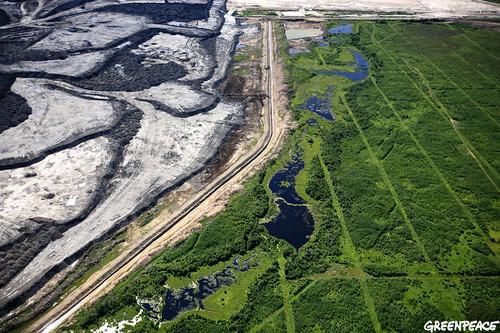
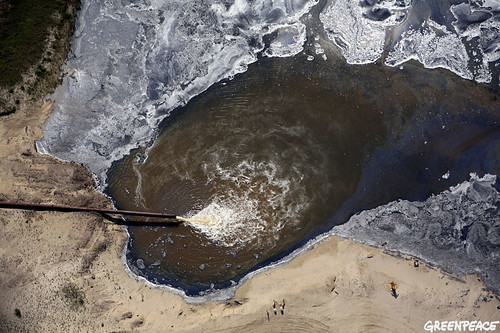
Hidden cost of cuts to Environment Canada
http://www.thestar.com/iphone/opinion/editorialopinion/article/1043380--hidden-cost-of-cuts-to-environment-canada
posted from Bloggeroid
Use any chargers for cellphones in Europe
Interchangeable
The uniform charger means new phones will no longer comes with chargers, and there will be less electronic waste.
The European Union will soon bid a fond farewell to a hassle that spares few cellphone users: a dead battery and no suitable power charger.
Starting next year, cellphones in Europe will have a one-size-fits-all charger.
It will also let owners easily borrow someone else's charger when the juice is gone.
"How cool is that?" asked EU spokesman Dennis Abbon on Friday.
The Associated Press
"[…] I knew it would resonate with people because plastic is something we touch every day without even thinking about it." Indeed, from alarm clocks and toothbrushes to shampoo bottles and razors, most of the developed world relies on this material just to get out of bed and showered in the morning. The problem, explains Connacher, is that nobody stops to wonder where all this plastic came from and what happens when we throw it out.
In U.S. cemeteries alone, some 90,000 tons of steel, copper and brass, 1.6 million tons of reinforced concrete, and 800,000 gallons of embalming fluid like buried in caskets, vaults and corpses. That's not to mention the energy consumed in cremating a body at temperatures of more than 900C or the dioxins [and heavy metals] spewed into the atmosphere in the process.
from http://www.guardian.co.uk/commentisfree/andrewbrown/2009/feb/25/religion-christianityIt is good to know that two bishops are undertaking a "Carbon fast" which will require them to turn off their computers every night, rather than leaving them on standby.
Unfortunately, I am not very good at piety and it made me wonder, in a rather irreverent way, about the the environmental consequences of burning heretics. Is orthodoxy carbon-neutral? It turns out to be quite difficult to calculate this. Cremation is less green than burying people, but this is partly a result of the attempts that crematoria now make to avoid pollution, which requires burning the bodies at very high temperatures.
But an auto-da-fe does not need to be nearly as hot as a modern crematorium. The purpose of the fire is not to reduce the heretic to ashes, but to impress the onlookers with the horror of the crime. But even at these lower temperatures it seems at least as environmentally sinful as a barbecue and we know we are meant to be giving those up, too.
Perhaps the greenest religion ever developed was that of the Aztecs, who kiled their victims with stone knives. In fact their entire way of life has been analysed from an ecological point of view by the late anthropologist Marvin Harris, who concluded that human sacrifice was an ecological necessity for an urban civilisation in central Mexico. So far as I know, they did not sacrifice heretics, only enemy prisoners, but you can see how heresy was discouraged by the practice all the same.
It is a commonplace of anti-Aztec propaganda that the hearts of the sacrificial victims were offered to the gods, after being cut, still beating, from their bodies. This was a waste, and would of course have required fuel for the sacrificial pyres. But Harris was the first man to ask what happened to the rest of the prisoners; and he concluded that their bodies were also cooked, and then eaten. Central America had very few native domesticable sources of animal protein – only birds and dogs, in fact. So the meat from these vast temple sacrifices would have made a noticeable difference to the soldiers lucky enough to be fed. By the same token it would have increased their zeal in battle very considerably. To be taken prisoner really was a fate worse than most other deaths. You can see how the system could become self-perpetuating.
Harris is rather out of fashion now: he analysed all sorts of religious taboos as disguised ecological rules: the sacredness of cow, he thought, was an expression of the fact that the farmer who eats his bullock in a famine year might as well be dead, since when the rains come he will be unable to plough.
Similarly, the taboo on pork in Judaism and Islam makes sense in the Middle East, where the pig is a bad ecological bargain.
Obviously, if you are a true believer, this kind of explanation will be unsatisfactory. It's also unsatisfactory if you are the kind of rationalist who wants all religions and all superstitions to be equally ridiculous and unscientific. And it offends, finally, people like me who dislike the idea that religious practice can be explained away or reduced to anything else.
None the less, the link between religion and ecology is worth thinking about. One of the things that all religions have are prohibitions which have to be obeyed "just because". Heresy is shunned not because it is rationally wrong, but because it is heretical. But these attitudes aren't confined to religion. Nor could they be, because they are indispensable for any large scale social organisation. If everyone stops to question everything, nothing gets done. What religions do, to some extent, is to internalise social disciplines so that they come to seem morally binding and quite impossible to analyse coldly. We're going to need that kind of social discipline to cope with the shrinking resources of the world.
Actually fiddling around to discover the precise carbon footprint of everything we do is absurdly time consuming and in any case unlikely to come up with the right answer. In this sense, environmentalism is indeed a religion, though one without any defined supernaturalist dogmas. Trust in authority, whether Pope Benedict or George Monbiot, is the only way we can hope to link the greater rationality of wanting to preserve humanity with the rationality of the small scale decisions we make all the time about how to live. Of course it is absurd. But so are all the alternatives; and they are worse.
Should hunters switch to 'green' bullets?
- Story Highlights
- Green bullets are those that don't contain lead, a toxic metal
- Last year, California banned lead bullets in the area where an endangered bird lives
- Copper bullets are the main alternative to lead
- Hunting and gun groups oppose bans on lead bullets, saying they pose no risks
By John D. Sutter
CNN(CNN) -- Three years ago, Phillip Loughlin made a choice he knew would brand him as an outsider with many of his fellow hunters:
He decided to shoot "green" bullets.
"It made sense," Loughlin said of his switch to more environmentally friendly ammo, which doesn't contain lead. "I believe that we need to do a little bit to take care of the rest of the habitat and the environment -- not just what we want to shoot out of it."
Lead, a toxic metal that can lower the IQs of children, is the essential element in most ammunition on the market today.
But greener alternatives are gaining visibility -- and stirring controversy -- as some hunters, scientists, environmentalists and public health officials worry about lead ammunition's threat to the environment and public health.
Hunting groups oppose limits on lead ammunition, saying there's no risk and alternatives are too expensive.
The scope of the trend is difficult to measure. Americans spent an estimated $1.08 billion on ammunition in fiscal year 2008, according to tax reports from the Alcohol and Tobacco Tax and Trade Bureau. But the bureau does not track ammunition sales by type.
Industry groups are tight-lipped about their sales figures. Manufacturers contacted by CNN declined to release specific numbers.
Barnes Bullets, which manufactures copper bullets because, the company says, they perform better than lead, is seeing increased interest in its non-lead products, said Jessica Brooks, the Utah company's spokeswoman.
Loughlin, of Union City, California, has noticed new manufacturers jumping into the green bullet game.
"They're definitely coming out. Winchester and Remington, all the big-name ammo makers are loading green ammunition now," he said.
Some firing ranges are banning lead for safety reasons. Lead bullets contaminate military training grounds across the country and are the subjects of many environmental cleanups.
California and other state governments have taken up lead bullets as a matter of policy. They worry that lead from the bullets contaminates ecosystems and could affect people.
Last year, California banned lead bullets in the chunk of the state that makes up the endangered California condor's habitat. The large birds are known to feed on scraps of meat left behind by hunters. Those scraps sometimes contain pieces of lead bullets, and lead poisoning is thought to be a contributor to condor deaths.
Arizona, another condor state, gives out coupons so hunters can buy green ammunition. Utah may soon follow suit.
In North Dakota, a hunter has raised concerns about lead's potential impact on humans.
Dr. William Cornatzer, a dermatologist and falconer, saw a presentation about the potential dangers of lead at a board meeting of the Peregrine Fund, a group devoted to conserving birds of prey. He decided to collect and test venison samples that were going to be donated to a local program for the hungry. About half of the 100 samples -- all shot by hunters -- tested positive for lead, he said. Food banks and shelters pulled the meat from their shelves after the report.
"When we did this, I about fell out of my shoes," he said. "The scary thing is these fragments are almost like dust in the meat. They're not like metal fragments you would feel when you bite down."
States in the area started investigating the issue after Cornatzer's findings.
Working with the Centers for Disease Control and Prevention, the North Dakota Department of Health ran a test to find out the health effects of lead-shot game. The agency compared blood-lead levels of people who regularly eat meat shot with lead bullets with the levels of those who don't eat much wild game.
The results were inconclusive. Those who ate the lead-shot meat had slightly higher blood-lead levels than those who didn't, but none of the 738 people in the study had levels above the government's threshold for danger.
Still, the health department recommended that children younger than 6 and pregnant women stop eating venison shot with lead bullets because those groups are at particular risk for lead poisoning, even at low levels.
The department also recommended lead-free bullets as the simplest solution to possible contamination.
The Minnesota Department of Natural Resources followed with its own study, which found that when lead bullets explode inside an animal, imperceptible particles of the metal can infect meat up to a foot and a half away from the bullet wound -- farther than previously thought.
More research is needed to tell for sure if lead-shot meat poses a risk to people, said Dr. Steve Pickard, an epidemiologist at the North Dakota Department of Health. But until that research is done, people should take sensible precautions, he said.
"There is no cause for alarm, but it is another source of lead in the environment," he said of lead ammunition.
Hunting groups say lead bullets pose no risk to people or the environment.
Available studies -- particularly the one from North Dakota -- prove that point, said Ted Novin, spokesman for National Shooting Sports Foundation.
"The CDC study confirmed what hunters have known for centuries: Consuming game hunted with traditional [lead] ammunition has never been shown to pose a health risk to anyone," he said.
Pickard said Novin's group is misrepresenting science.
The NSSF and the National Rifle Association say efforts to ban lead ammunition are veiled attempts to take guns away from hunters. They also point to the fact that lead's main alternative, copper, is more expensive and isn't available in all calibers.
Novin said the added expense will drive many people away from a sport that is part of American heritage.
"Many hunters believe lead is the best metal to be used for hunting," he said. "Add into that that it [lead] is very affordable and it is very available. We think this absolutely should be left up to hunters."
Dr. Joseph Graziano, interim department chair of environmental health sciences at Columbia University's Mailman School of Public Health, said the public should switch away from lead bullets -- even if the research is still developing.
"It's hard to imagine that you could make a bullet out of something more toxic than lead," he said.
Loughlin, who switched to green ammo and blogs on the issue, said that lead shouldn't be banned from hunting but that hunters and the public should be more aware of lead's potential to cause harm.
"Lead will get into you, and we need to be working towards getting it out of the system," he said. "I think it's something we could do away with over time."
Why does the public often pay more attention to climate change deniers than climate scientists? Why do denial arguments that have been thoroughly debunked still show up regularly in the media?
Some researchers from New York's Fordham University may have found some answers. Prof. David Budescu and his colleagues asked 223 volunteers to read sentences from reports by the Intergovernmental Panel on Climate Change. The responses revealed some fundamental misunderstandings about how science works.
Science is a process. Scientists gather and compare evidence, then construct hypotheses that "make sense" of the data and suggest further tests of the hypothesis. Other scientists try to find flaws in the hypothesis with their own data or experiments. Eventually, a body of knowledge builds, and scientists become more and more certain of their theories. But there's always a chance that a theory will be challenged. And so scientists speak about degrees of certainty. This has led to some confusion among the public about the scientific consensus on climate change.
What Prof. Budescu and his colleagues found was that subjects interpreted statements such as "It is very likely that hot extremes, heat waves and heavy precipitation events will continue to become more frequent" to mean that scientists were far from certain. In fact, the term very likely means more than 90 per cent certain, but almost half the subjects thought it meant less than 66 per cent certain, and three quarters thought it meant less than 90 per cent.
According to an article in New Scientist, the researchers concluded that scientists should use both words and numbers to express certainty. For example, the IPCC considers "virtually certain" to mean more than 99 per cent likely; "very likely" to mean more than 90 per cent certain; "likely" to be more than 66 per cent; "more likely than not" more than 50 per cent; and so on.
It's important to understand the distinctions. People who recognize the urgency of the situation are more likely to get behind solutions. And businesses and governments are more likely to work toward solutions when the public demands that they do.
And how urgent is the situation? The IPCC has concluded it is "very likely" that human emissions of greenhouse gases rather than natural variations are warming the planet's surface. Remember, that means they are more than 90 per cent certain. That's about as close to unequivocal as science gets. The IPCC has also concluded that the consequences could be catastrophic.
This is science that has been rigorously peer-reviewed and that has been agreed upon by the vast majority of the world's climate scientists, as well as more than 50 scientific academies and societies, including those of all G8 nations. There has been no peer-reviewed scientific study that has called into question the conclusions of the IPCC, which represents the consensus of the international scientific community.
So why does the debate still continue? Why are we fiddling while Rome burns? Well, as Prof. Budescu's research shows, some people don't really understand how science works. And people with vested interests, many of whom work with the oil and coal industries, are all too willing to exploit that lack of understanding by sowing confusion.
It's also true that many people fear change. We've seen examples of economic prosperity and job creation brought about by investments in green energy in places such as Germany and Sweden. And leading economists, including former World Bank chief economist Nicholas Stern, have warned that not doing anything to confront climate change will cost us far more in the long run than acting now. But many people still fear that any profound change will upset the economy or diminish their quality of life.
We may never reach 100 per cent certainty on climate change and its causes – that's not what science is about – but one thing is certain: if we don't get together to work on solutions now we'll have a much tougher time dealing with the consequences later.
Take David Suzuki's Nature Challenge at www.davidsuzuki.org.
---------- Forwarded message ----------Never taken such a public stance before; we'll see where this goes. I wonder if it'll even be published. At least my local councilor is already a strong proponent for intensification.
Date: Wed, Feb 4, 2009 at 22:46
Subject: Economic "growth" is no way to rate the health of a city
Re: What cost development? Feb 4 2008
I believe that pushing the urban boundary for new developments is extremely shortsighted, and plain wrong on all other levels.
We have lived in a time when growth was considered good - as long as there were more people coming, more consumers in the market, more agricultural land to deplete, more forests to clear-cut, more oil to burn, more credit to stretch - things were supposed to be good. However, "measuring economic growth – as the current crisis proves – is no way to rate the health of the planet" (see http://www.guardian.co.uk/commentisfree/2009/feb/02/climatechange-economicgrowth for details).
What exactly does building more homes achieve? Canadians have already outpaced our American neighbors in terms of spending on credit (a very bad habit of overconfidence fueled by recent political statements like "ours is the most robust banking system in the world" and "we are sheltered from this storm"). Is this really the time to encourage people to buy new homes and stretch their mortgages even more? Is it really beneficial for the city to increase the new areas it has to service while the infrastructure in older neighborhoods is on the verge of collapse? From what I've heard the construction trades in Ottawa were already over-stretched, with houses taking 16 months to build rather than the normal 9. It sure is fun and exciting for people to obsess over new homes, but what does that do for us in the long term? For example, what are we going to do in fifteen years, when the existing neighborhoods currently bedlocked by the babyboomer bulge are finally available, but all the new families have moved ever further out?
I profoundly disagree with the comment that "growth" - at least in the sense of construction - is "good" for us, even if it generates "profit" for the lucky few, who then spend much of it offshore for electronic gadgets that our own labour force is too expensive to manufacture here, because too many people are tied to construction... Just moving money around simply does not create wealth. You can't export homes. You can't really export residential construction expertise to other parts of the world. All you can do is increase demand for natural resources best left untapped and artificially boost wage expectations due to false labour shortages (because people are working on the wrong things). How is that supposed to be good for us in the long run?
Let's focus on ruban renewal instead - better services, better quality of life. The charm of old cities like Montreal and Boston arose directly from the intensities of their populations. Rather than obsessing over manicuring their 5,000 square feet of grass and driveway with pesticides and oil products, and filling their homes with ephemeral gadgets, residents should be able to gather in cafes, markets, theaters, pubs and parks, and focus on the finer qualities of life.
It's easy, and politically convenient to focus attention on shiny new things, especially when the old things aren't turning out as well as we had hoped. It's simple and simple sells. But praising expansion is also cheap politics, and poor public policy.
Cattle are recyclers. As plants grow, they take carbon dioxide out of the atmosphere. When cattle eat the grass, they burn the gasses back into the air. Some of this gas is carbon dioxide that is then recycled by the plants.
Our Government understands that Canada’s economic prosperity cannot be sustained without a healthy environment, just as environmental progress cannot be achieved without a healthy economy. Our Government will continue its realistic, responsible approach to addressing the challenge of climate change.responsible and realistic? the alliteration makes it sound nice, and it is surely meant to be reassuring, but it's also a cheap partisan shot.Our Government has committed to reducing Canada’s total greenhouse gas emissions by 20 percent by 2020.I'm glad to see he's using all GHGs, not just carbon, but what year is he using as a baseline?We will meet this goal while also ensuring that Canada’s actions going forward remain comparable to what our partners in the United States, Europe and other industrialized countries undertake.While this may be good for the (currently deeply flawed) economy, it is not good enough to protect unique Canadian environmental needs.We will work with the provincial governments and our partners to develop and implement a North America-wide cap and trade system for greenhouse gases and an effective international protocol for the post-2012 period.Another partisan shot (implying other approaches would be ineffective), and buys him lots of time - a clear warning too that any delays will be the fault of the partners' and/or provinces. Does that qualify as bullying?To meet the challenge posed by climate change, we will also need to make greater use of technologies that do not emit greenhouse gases.No shit, sherlock, but what about the continued rape of the tarsands?Our Government will set an objective that 90 percent of Canada’s electricity needs be provided by non-emitting sources such as hydro, nuclear, clean coal or wind power by 2020. In support of this ambitious national goal, our Government will continue to provide support for biofuels, wind and other energy alternatives."continue?" how about increasing them?To ensure protection of our vital resources, our Government will bring in legislation to ban all bulk water transfers or exports from Canadian freshwater basins.Outstanding! But what is "bulk water" - does bottling count? And for the Great Lakes, on which our southern neighbors have a legitimate 50% claim, what action will he take to prevent them from piping that water down to Arizona?Our Government will work with all parties in Parliament to introduce sensible policies that can help consumers and improve our environmental well-being, such as increasing incentives for energy-saving home retrofits.Glad to see he's reaffirmed the stupidity of scrapping the previous gov'ts program.
Another illustration of science (chemistry and research) raising
concerns of the 'fast food' industry i.e. tracing the source of this
industry's food supply and what is really in your combo/trio selections
from McDonald's, Wendy's and Burger King ...
http://www.ctv.ca/servlet/ArticleNews/story/CTVNews/20081114/forbes_fast
_food_081115/20081115/
The signatories agree on these 10 principles:
1. Canada needs to act on climate change now.
2. Any substantive action will involve economic costs.
3. These economic impacts cannot be an excuse for inaction.
4. Pricing carbon is the best approach from an economic perspective.
1. Pricing allows each business and family to choose the response that is best and most efficient for them.
2. Pricing induces innovation.
3. Carbon is almost certainly under-priced right now.
5. Regulation is the most expensive way to meet a given climate change goal.
6. A carbon tax has the advantage of providing certainty in the price of carbon.
7. A cap and trade system provides certainty on the quantity of carbon emitted, but not on the price of carbon and can be a highly complex policy to implement.
8. Although carbon taxes have the most obvious effects on consumers, all carbon reduction policies increase the prices individuals face.
9. Price mechanisms can be regressive and our policy should address this.
10. A pricing mechanism can allow other taxes to be reduced and provide an opportunity to improve the tax system.
# Bush wants federal agencies to decide for themselves if projects harm wildlifeAnother step backward to a bleak future.
# Changes would "seriously weaken" habitat protections, says conservationist
# New rules end reviews that developers say increase many project cost
# Similar bill passed in the House in 2005 but died in the Senate